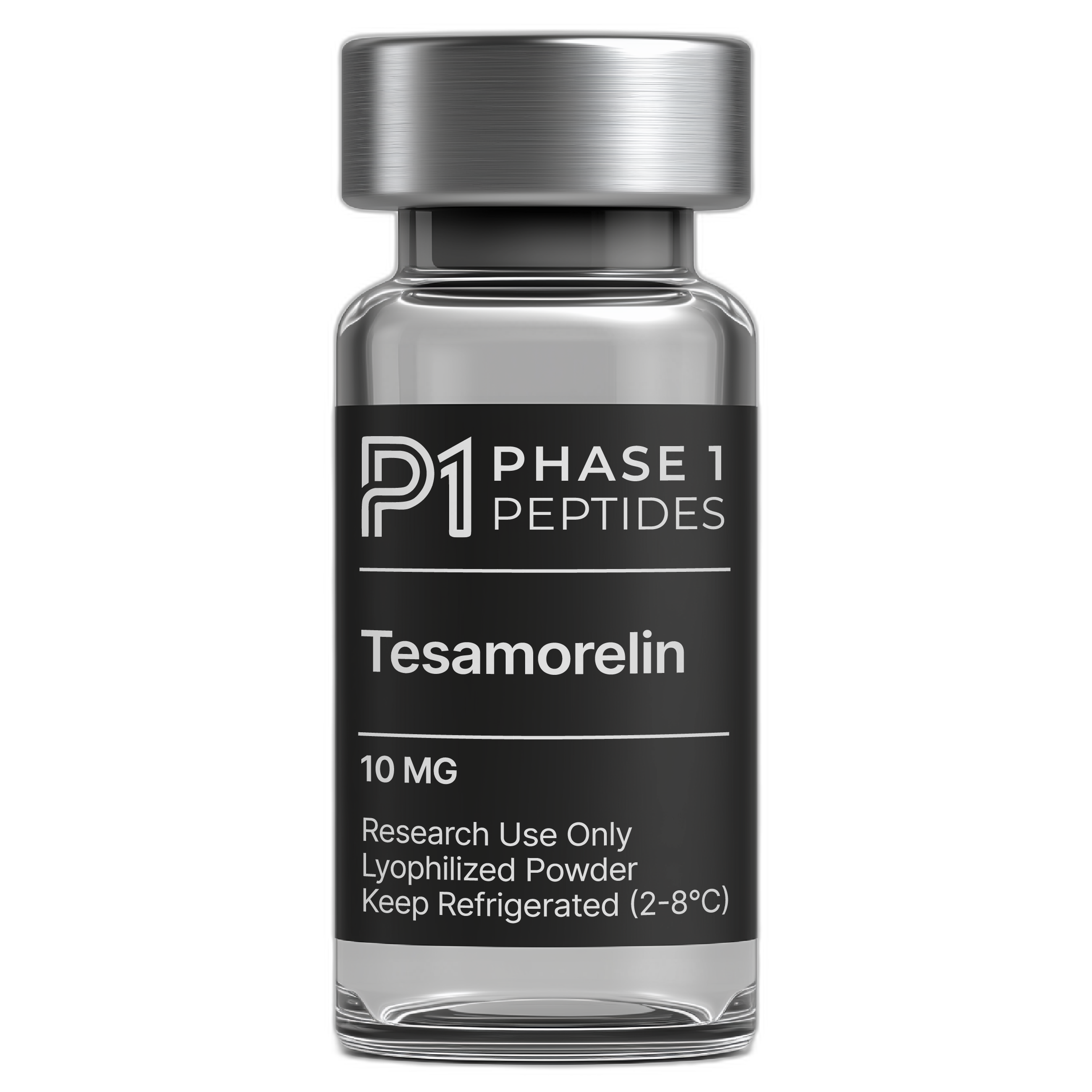
Tesamorelin
A stabilized GHRH analogue studied in growth hormone secretion research, with applications in examining lipid metabolism and somatotropic pathway activity. Its enhanced stability compared to native GHRH makes it particularly useful in studies requiring consistent receptor activation profiles.
Tesamorelin Overview
Tesamorelin is a stabilized analogue of growth hormone-releasing hormone designed for research involving upstream endocrine signaling. In laboratory settings, it is used to examine how GHRH receptor activity influences pituitary signaling, growth hormone pathway dynamics, and broader hormone-regulated cellular processes.
Mechanism of Action & Applications
Tesamorelin is studied for agonist activity at the growth hormone-releasing hormone receptor. In research models, this makes it useful for examining pituitary receptor signaling, pulsatile growth hormone pathway activity, hypothalamic-pituitary axis biology, and broader endocrine communication systems. It is commonly used in studies involving GHRH receptor pharmacology, peptide stability, endocrine signaling, and growth hormone pathway regulation.
Research History
Tesamorelin developed from earlier work on native GHRH and shorter GHRH analogues designed to improve stability and preserve receptor activity. As research expanded, tesamorelin became a useful peptide for studying how structural modification can affect peptide half-life, receptor engagement, and downstream endocrine signaling behavior.
Chemical Information
- CAS Number
- 218949-48-5
- Molecular Formula
- C221H366N72O67S
- Molecular Weight
- 5,135.9 g/mol
- PubChem ID
- 16137834
For research use only. Not for human or veterinary use. Detailed storage guidelines →
Often Paired With
Researchers who buy Tesamorelin commonly stock these alongside it.

Researcher Reviews