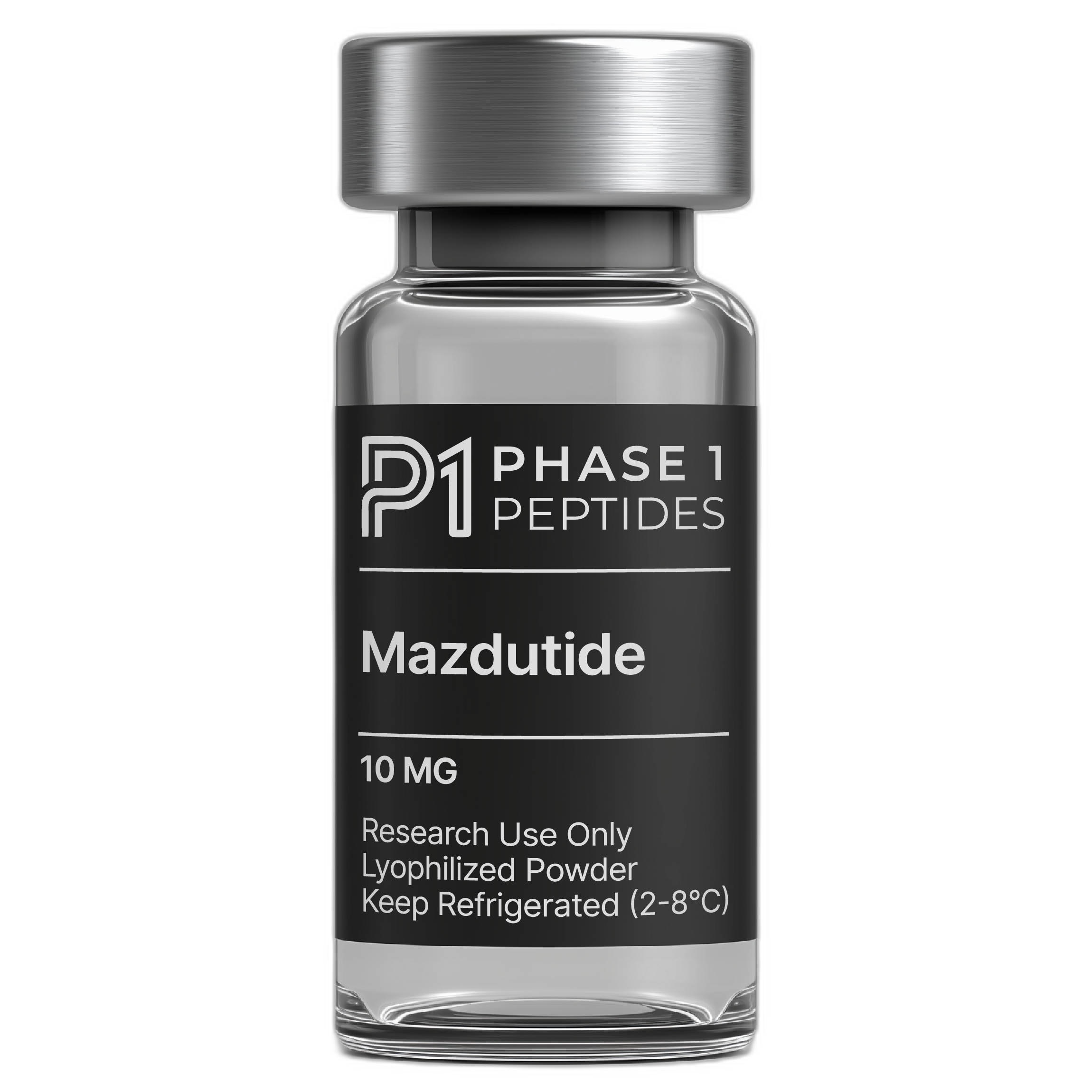
Mazdutide
An oxyntomodulin-based dual agonist peptide studied in metabolic research involving GLP-1 and glucagon receptor-mediated signaling pathways. Its dual-receptor activity makes it a valuable tool in studying how combined incretin and glucagon signaling affects energy balance.
Mazdutide Overview
Mazdutide, also known as IBI362, is an oxyntomodulin-based peptide studied for dual activity across GLP-1 and glucagon receptor pathways. In research settings, it is used to examine how these two receptor systems work together and how combined receptor activity influences broader metabolic and endocrine signaling.
Mechanism of Action & Applications
Mazdutide is studied as a dual agonist at the GLP-1 and glucagon receptors. This receptor profile allows researchers to examine how simultaneous activation of incretin- and glucagon-related pathways affects intracellular signaling, energy balance regulation, and broader metabolic system responses. It is commonly used in research involving incretin biology, glucagon receptor signaling, metabolic pathway coordination, and dual-receptor peptide design.
Research History
Mazdutide emerged from efforts to develop dual GLP-1/glucagon receptor agonists based on oxyntomodulin-related peptide design. Published phase 1b and phase 2 studies later expanded its characterization in controlled research settings, helping establish it as a notable dual-agonist peptide within metabolic pathway research.
Chemical Information
- CAS Number
- 2259884-03-0
- Molecular Formula
- C207H317N45O65
- Molecular Weight
- 4,477.14 g/mol
- PubChem ID
- 167312357
For research use only. Not for human or veterinary use. Detailed storage guidelines →
Researcher Reviews
You May Also Like